The Basics
What Is Cosmetology?
What Is Cosmetology?
What is cosmetology? It's the licensed trade of cutting, coloring, chemically treating and styling hair, along with nail and basic skin services, done for pay. Every state requires a license, and you earn it by finishing a state-approved program, most often 1,500 clock hours, and passing the state board's exams. See the cosmetology license rules by state or the best cosmetology schools.
What Is Cosmetology, in the Law and in the Salon
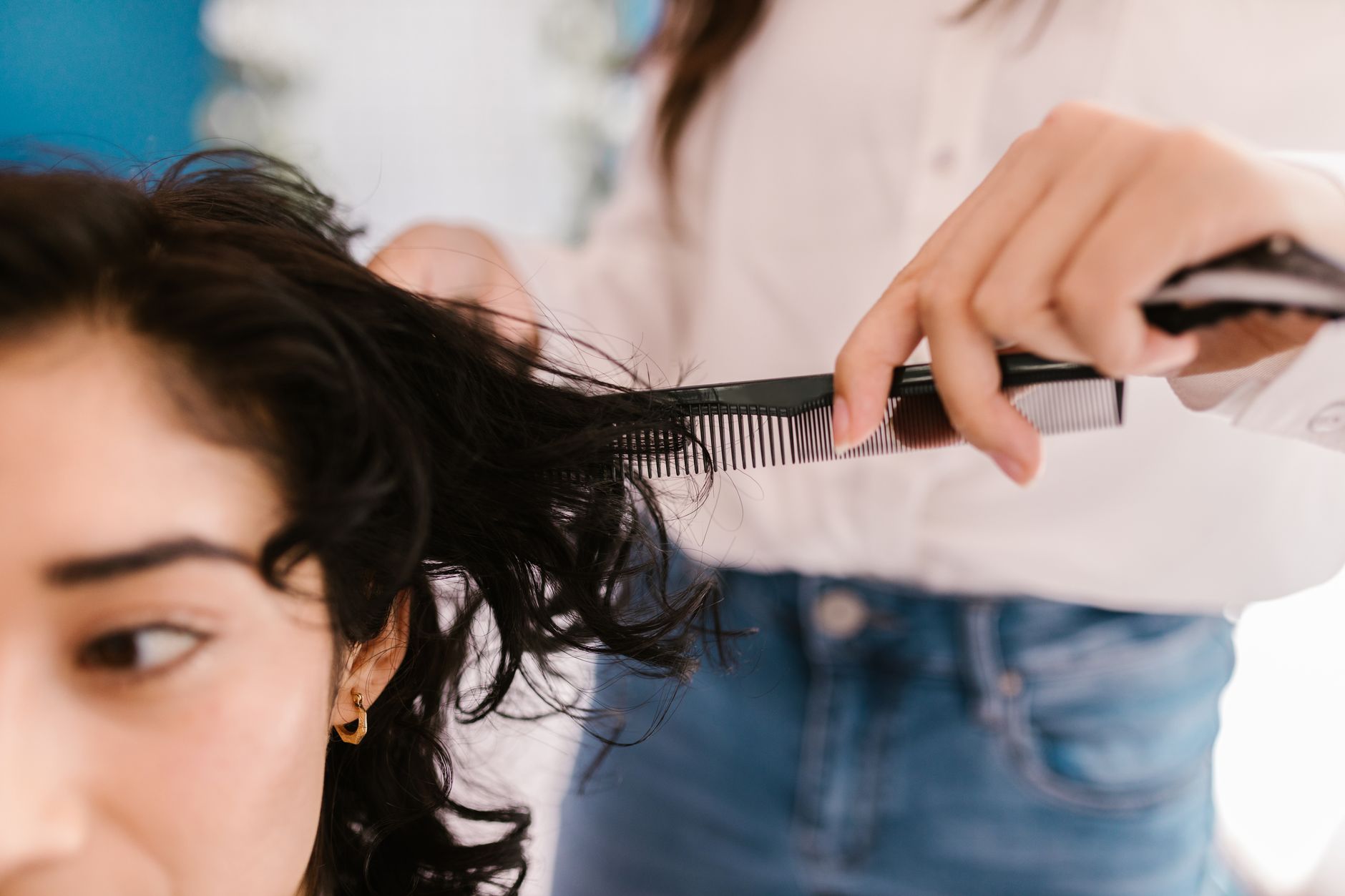
Cosmetology is the work of changing how hair, nails and skin look, for pay, under a state license. Florida’s statute puts it plainly: cosmetology is the mechanical or chemical treatment of the head, face and scalp for appearance rather than medical reasons. It lists hair shampooing, cutting, arranging, coloring, permanent waving and relaxing, then adds hair removal, waxing, manicures, pedicures and skin care services.
That definition is a good map of what you’ll actually do. Most of the day is hair: haircuts, color and highlights, perms and relaxers, blowouts and updos. Nails and basic skin work sit inside the same license, so one cosmetology license lets you offer a haircut, a color and a pedicure.
The word itself doesn’t change from state to state, but the license title does. Alaska and Connecticut license “hairdressers,” Oregon certifies hair design as its own field, and Puerto Rico licenses “especialistas en belleza.” Behind each title sits a state board that sets the hours, runs the exams and renews your license. You’ll find all 52 of those boards, with their rules, in the cosmetology license guide.
What You Learn in a Cosmetology Program
A cosmetology program splits its hours between theory (chemistry, infection control, anatomy of hair and skin, state law) and hands-on practice, first on mannequin heads and then on paying clients on the school’s salon floor.
The state exams show what boards expect you to know. Puerto Rico’s practical exam, for example, asks for a haircut, a cold wave, a facial, a gala makeup, a manicure, pin curls, rollers, an elaborate style and sterilization of your tools. Arizona’s apprenticeship route requires at least 250 hours of infection protection and law review, and Nevada asks for 4 hours of infection control instruction before every renewal. Safety isn’t a side topic: it’s tested and retested.
Some boards spell out how the hours divide. Wyoming’s 1,600-hour course includes 850 hours of hair and 300 of nail technology. Massachusetts builds 50 hours of manicuring into its 1,000-hour course. Every program covers the core services you’ll be tested on:
- Haircutting and styling: shears, razors, clippers, blowouts, curling and updos.
- Hair color: single process, highlights and foils, corrective color and the chemistry behind lightening.
- Chemical texture: permanent waves and relaxers, the services where mistakes damage hair.
- Nails and basic skin care: manicures, pedicures, facials and hair removal, as your state’s scope allows.
- Infection control and state law: sanitation, disinfection, and the rules your board enforces.
How Many Hours Cosmetology Takes, State by State
Every state sets a minimum number of training hours before you can sit for the license exams. Across 51 jurisdictions with a published figure, the range runs from 1,000 to 1,800 hours, and 1,500 is the most common requirement, used by 24 of them.
| Required hours | Example states | What it means for you |
|---|---|---|
| 1,000 | California, New York, Texas, Massachusetts, Virginia | The shortest route to a license; full-time students can finish in well under a year |
| 1,200 to 1,250 | Florida, New Jersey, New Hampshire, Oklahoma, Pennsylvania, Utah | A short program by national standards |
| 1,500 | Alabama, Arizona, Illinois, Michigan, North Carolina, Ohio | The most common requirement |
| 1,550 to 1,650 | Iowa, Minnesota, Wisconsin, Idaho, Nevada, Washington, Wyoming, Alaska | Longer than most |
| 1,800 | Hawaii, Nebraska, West Virginia | The longest requirement |
Hours matter if you might move. A license earned with 1,000 hours in California can leave you short in a 1,500-hour state, and some boards make you make up the gap or prove licensed work experience first. Virginia cut its requirement from 1,500 to 1,000 hours in September 2024, and California dropped from 1,600 to 1,000 in 2022, so check the current rule before you enroll. The license hours checker compares any two states.
Several states also let you train as an apprentice in a licensed salon instead of a school, usually for more hours: 3,000 in Alabama, Mississippi, Missouri and Montana, and 3,200 in California, Idaho and Nevada.
What Cosmetology School Looks Like Today
Research verified 1,491 cosmetology programs at 1,276 campuses on each school’s own pages in November 2026. Most (1,086) are measured in clock hours; 193 are college programs measured in credits. Among programs that state a length, the median runs 44 weeks full time.
Schedules vary more than people expect. 569 programs offer an evening, part-time or weekend schedule, and 92 teach part of the theory online. A few examples show the spread:
- Avalon Institute-Mesa in Arizona teaches 1,500 hours in 52 weeks by day or 81 weeks in the evening, with part of the theory online.
- Winonah’s International School of Cosmetology in Hoover, Alabama runs 40 weeks by day or 63 weeks in the evening.
- Advance Beauty College in Garden Grove, California teaches California’s 1,000 hours in 25 to 50 weeks, with new classes starting every Friday.
- Robert Morgan Educational Center and Technical College in Miami, a public technical college, lists $3,072 in-state tuition for Florida’s 1,200 hours.
- Eastern Arizona College offers cosmetology as an associate degree over four semesters or a certificate over three.
Price is the other big difference. Among the 779 programs that publish tuition, the median is $18,000, and figures run from $3,000 to $30,655. Public technical colleges sit at the low end, and kits and books are often listed apart from tuition. The cost guide breaks this down.
What Each State Board Licenses
| State | License title | Cosmetology hours | Hair braiding |
|---|---|---|---|
| Alabama board rules | Cosmetologist | 1,500 | 210 hours |
| Alaska board rules | Hairdresser | 1,650 | 35 hours |
| Arizona board rules | Cosmetologist | 1,500 | |
| Arkansas board rules | Cosmetologist | 1,500 | |
| California board rules | Cosmetologist | 1,000 | |
| Colorado board rules | Cosmetologist | 1,500 | |
| Connecticut board rules | Hairdresser and Cosmetician | 1,500 | |
| Delaware board rules | Cosmetologist | 1,500 | |
| District of Columbia board rules | Cosmetologist | 1,500 | 100 hours |
| Florida board rules | Cosmetologist | 1,200 | |
| Georgia board rules | Master Cosmetologist | ||
| Hawaii board rules | Beauty Operator: Cosmetologist | 1,800 | Separate license |
| Idaho board rules | Cosmetologist | 1,600 | |
| Illinois board rules | Cosmetologist | 1,500 | 300 hours |
| Indiana board rules | Cosmetologist | 1,500 | |
| Iowa board rules | Barbering and Cosmetology | 1,550 | |
| Kansas board rules | Cosmetologist | 1,500 | |
| Kentucky board rules | Cosmetologist | 1,500 | |
| Louisiana board rules | Cosmetologist | 1,500 | 500 hours |
| Maine board rules | Cosmetologist | 1,500 | |
| Maryland board rules | Cosmetologist | 1,500 | |
| Massachusetts board rules | Cosmetologist | 1,000 | |
| Michigan board rules | Cosmetologist | 1,500 | |
| Minnesota board rules | Cosmetologist | 1,550 | |
| Mississippi board rules | Cosmetologist | 1,500 | |
| Missouri board rules | Cosmetologist (Class CH) | 1,500 | Separate license |
| Montana board rules | Cosmetologist | 1,500 | |
| Nebraska board rules | Cosmetologist | 1,800 | |
| Nevada board rules | Cosmetologist | 1,600 | Separate license |
| New Hampshire board rules | Cosmetologist | 1,200 | |
| New Jersey board rules | Cosmetologist-Hairstylist | 1,200 | 50 hours |
| New Mexico board rules | Cosmetologist | 1,600 | |
| New York board rules | Cosmetologist | 1,000 | 300 hours |
| North Carolina board rules | Cosmetologist | 1,500 | 300 hours |
| North Dakota board rules | Cosmetologist | 1,500 | |
| Ohio board rules | Cosmetologist | 1,500 | Separate license |
| Oklahoma board rules | Basic Cosmetologist | 1,250 | Separate license |
| Oregon board rules | Hair Design Practitioner Certificate | 1,110 | Separate license |
| Pennsylvania board rules | Cosmetologist | 1,250 | |
| Puerto Rico board rules | Especialista en Belleza (Beauty Specialist) | 1,000 | |
| Rhode Island board rules | Hairdresser and Cosmetician | 1,000 | |
| South Carolina board rules | Cosmetologist | 1,500 | 6 hours |
| South Dakota board rules | Cosmetologist | 1,500 | |
| Tennessee board rules | Cosmetologist | 1,500 | 16 hours |
| Texas board rules | Cosmetology Operator | 1,000 | |
| Utah board rules | Cosmetology License (Cosmetologist or Barber) | 1,250 | |
| Vermont board rules | Cosmetologist | 1,000 | |
| Virginia board rules | Cosmetologist | 1,000 | |
| Washington board rules | Cosmetologist | 1,600 | |
| West Virginia board rules | Cosmetologist | 1,800 | |
| Wisconsin board rules | Cosmetologist | 1,550 | |
| Wyoming board rules | Cosmetologist | 1,600 |
License titles and hours as each state board writes them, checked November 2026. The braiding column lists states with a separate hair braiding license.
Cosmetology vs Barbering, Hair-Only and Braiding Licenses
Cosmetology is the broadest beauty license, but it isn’t the only way to work on hair.
- Barbering is licensed separately in many states and leans toward short cuts, clipper work and shaving. Iowa merged barbering and cosmetology into one license in 2023, and several states let you cross over: Ohio licenses a barber as a cosmetologist after 1,000 hours, and West Virginia after 900.
- Hair-only licenses skip nails and skin. Arizona’s hairstylist license takes 1,000 hours against 1,500 for cosmetology, and California’s takes 600 against 1,000. New Mexico, Ohio, Washington, West Virginia and Wyoming have one too.
- Hair braiding is licensed or registered separately in 16 jurisdictions, with training that ranges from 6 hours for South Carolina’s registration to 300 hours for New York’s natural hair stylist license.
- Skin care has its own, shorter license in 50 states. Esthetician vs cosmetologist compares the two side by side.
If you’re sure you only want to cut and color, a hair-only license can save months. If you want the widest choice of salon jobs, or you might move, the full cosmetology license is the safer bet because nearly every state issues one.
How the State Board Exams Work
After your hours, you’ll take your state’s licensing exams. Many states give a written theory exam and a practical exam where you perform services on a mannequin under a timer, and many use the national NIC exams. A handful have dropped the practical.
| State | Exams | Detail from the board |
|---|---|---|
| California | Written (PSI) | License issued the same day you pass |
| Texas | Written and practical (PSI) | Written exam allowed after 900 hours |
| New York | Written and practical | Written exam is 2.5 hours, multiple choice |
| Pennsylvania | Written theory (Pearson VUE) | Practical dropped in 2014 |
| Massachusetts | Written theory (PSI) | Practical no longer required |
| Alabama | Written and practical (PSI) | Both must be passed within 24 months |
Schools that publish their results show how well students do. Among the 401 programs that publish a licensure pass rate, the median is 95%. Paul Mitchell the School-Birmingham reports a 100.00% licensure rate in its campus-wide NACCAS figures for 2024, and Bellus Academy-Chula Vista reports 100% for its advanced cosmetology program in 2024.
What Cosmetologists Do and Earn
Once licensed, you might work as a salon employee, rent a booth, or run your own suite. The Bureau of Labor Statistics notes that schedules often include evenings and weekends, because that’s when clients book.
BLS counts 305,710 hairdressers, hairstylists and cosmetologists on payrolls in May 2025, earning a median of $35,790 a year ($17.21 an hour). The bottom tenth earn $27,040 and the top tenth $71,190. Those wage figures leave out self-employed stylists, which is why BLS’s broader employment count for the occupation, including them, is 595,000 for 2025. BLS projects that figure to grow 8% by 2035. Pay by state and by role is in the cosmetologist salary guide.
Is Cosmetology a Good Fit for You?
Cosmetology suits you if you like hands-on work, want a license in about a year rather than a degree in four, and are comfortable building a client list. The trade-offs are real, and the numbers show them:
- Finishing is the hard part. Among programs that publish outcomes, the median completion rate is 78%, so a real share of students who start don’t finish on time. Ask yourself whether the schedule fits your life before you sign.
- Pay spreads widely. The bottom tenth of earners make $27,040 and the top tenth $71,190, and a steady client list is what moves you up.
- Your hours follow your state. Train for the state where you’ll work, or for the higher-hour state if you might move.
- Tuition runs from $3,000 to $30,655. A public technical college and a private academy can teach the same state hours for very different prices.
How to Start in Cosmetology
- Look up your state’s hours and exams in the cosmetology license guide.
- Shortlist programs near you with the school finder or your state’s ranking, and compare published tuition, schedules and pass rates.
- Enroll, finish your hours, and apply to sit for the board exams.
- Pass the exams, receive your license, and renew it on your board’s cycle.
How to become a cosmetologist walks through each step in detail.
Frequently Asked Questions
Does Cosmetology Include Nails and Makeup?
Yes, in most states the license covers them. Florida's legal definition of cosmetology names manicures, pedicures and skin care services alongside hair, and Puerto Rico's practical exam includes a manicure and a full gala makeup. Nail technicians can also hold a shorter nail-only license.
Can You Do Hair for Money Without a Cosmetology License?
No. The Bureau of Labor Statistics states that all states require barbers, hairstylists and cosmetologists to be licensed. A few states, Arizona and California among them, issue a hair-only license that takes fewer hours, and 16 jurisdictions license hair braiding on its own.
Is Cosmetology the Same as Hairdressing?
Mostly. Alaska and Connecticut license hairdressers rather than cosmetologists, with 1,650 and 1,500 training hours. The work is the same hair, color and chemical services, and the board decides which services the license covers.
Is a Cosmetology License Good in Every State?
Not automatically. You apply in the new state by reciprocity or endorsement. Some states, such as California, license out-of-state holders without the written exam, while others ask you to make up hours if your first state required fewer. Compare hours between states.
Is Cosmetology a College Degree?
It can be. Most programs are certificates or diplomas measured in clock hours, but 193 of the 1,491 verified programs are measured in college credits, and community colleges such as Eastern Arizona College offer a cosmetology associate degree. Cosmetology degree options.
How Old Do You Have to Be to Get a Cosmetology License?
It depends on the state: 16 in Alabama, Arizona and Florida, 17 in California and Texas, and 18 in Kentucky, Montana and Nevada, from each board's own rules.
Keep Reading
- Cosmetology ProgramsWhat cosmetology programs and classes cover, how many clock hours they run, what they cost and which schedules schools offer
- How Long Cosmetology School TakesHow many clock hours and weeks cosmetology school takes, by state requirement and by the schedules schools publish
- Online Cosmetology SchoolWhat part of cosmetology training can be online, which schools run hybrid theory and why the practical hours stay in person
- Cosmetology DegreeWhich community and technical colleges award an associate degree in cosmetology, how it differs from a clock-hour certificate, and what it costs
- How to Become a CosmetologistThe school hours, state board exams and license steps that take you from no experience to a licensed cosmetologist
- Cosmetology School CostWhat cosmetology school costs, from the program tuition figures schools publish, what the tuition figure leaves out and how to pay for it
- Continuing EducationWhich states require continuing education to renew a cosmetology license, how many hours, and how often you renew
- Best Cosmetology SchoolsEvery verified program, ranked
- Cosmetology License by StateHours, exams and fees in every state
Sources
- Florida Statutes, s. 477.013: cosmetology definitions
- U.S. Bureau of Labor Statistics, Occupational Outlook Handbook: Barbers, Hairstylists, and Cosmetologists
- U.S. Bureau of Labor Statistics, OEWS May 2025: Hairdressers, Hairstylists, and Cosmetologists (39-5012)
- Puerto Rico Junta Examinadora de Especialistas en Belleza: applicant manual
- State boards of cosmetology: license pages, rules and statutes, checked November 2026
- U.S. Bureau of Labor Statistics, Occupational Employment and Wage Statistics, May 2025: Hairdressers, Hairstylists, and Cosmetologists (39-5012)