Career Guide
How to Become a Cosmetologist
How Do You Become a Cosmetologist?
How to become a cosmetologist comes down to three steps: you finish a state-approved cosmetology program, pass your state board's written and practical exams, and apply for your license. Most states set 1,500 training hours (24 of them), with a range from 1,000 hours in states such as California, New York and Texas to 1,800 in Hawaii and Nebraska. Full-time programs run a median of 44 weeks. Check your state's number with the license hours checker before you pick a school.
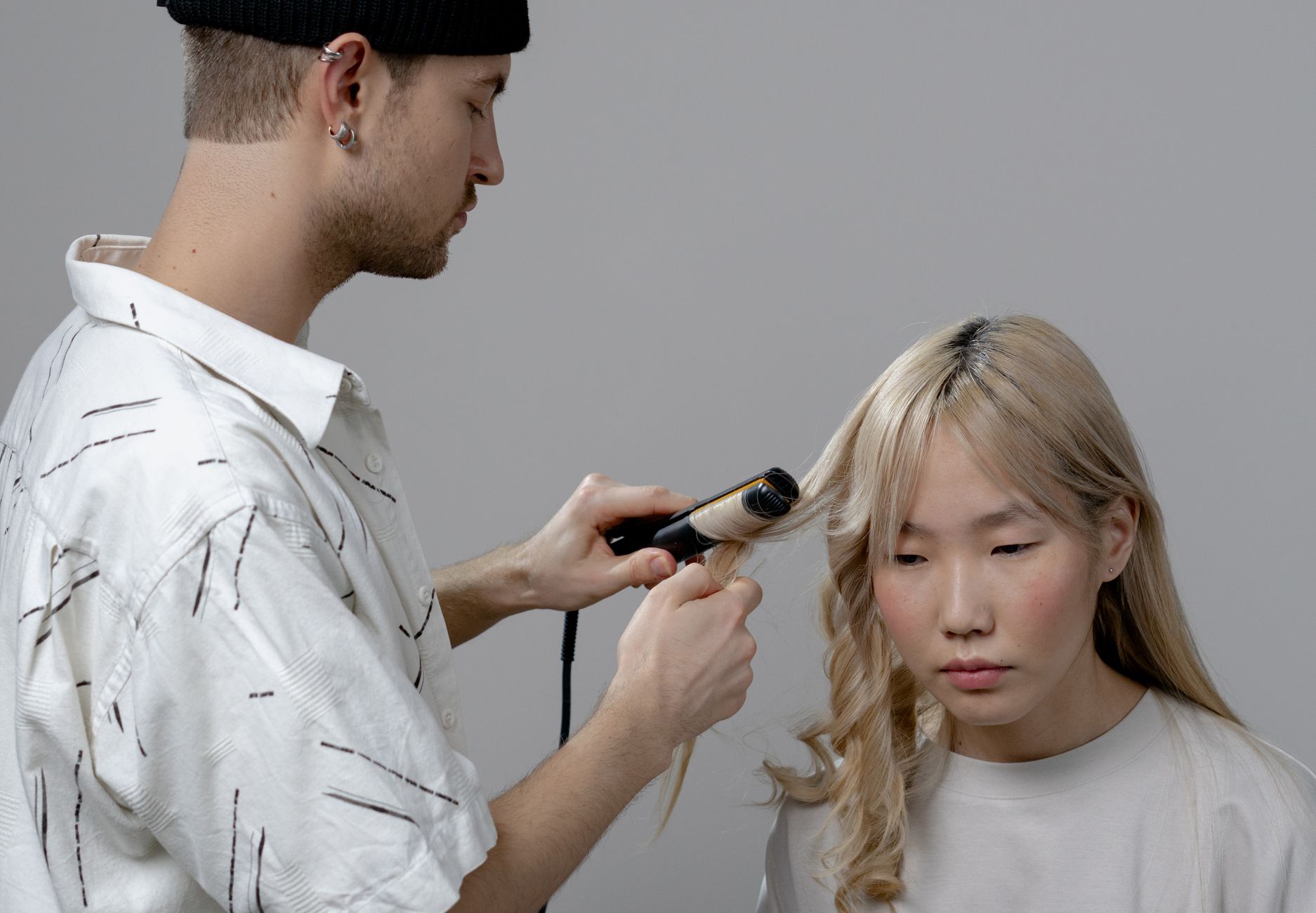
How to Become a Cosmetologist, in Order
Becoming a cosmetologist follows the same order in every state, even though the numbers change at each border. Here’s the sequence:
- Check your state’s required hours. Your state board sets the training hours, the minimum age and the education you need to test. Look these up first, because they decide which programs count.
- Enroll in a state-approved cosmetology program. That’s a beauty school, a career college, a technical center or a community college. Across 1,491 verified programs at 1,276 campuses, the median program runs 1,500 clock hours.
- Finish your hours. A full-time student needs a median of 44 weeks. Part-time and evening schedules take longer.
- Pass the state board exams. Most states give a written theory exam and a practical exam. Some add a state laws test.
- Apply for your license and pay the fee. In Alabama that’s a $75 written exam, a $130 practical exam and a $50 original license.
- Renew on time. Most licenses renew every two years, and 15 jurisdictions tie renewal to continuing education or a required course.
The rest of this guide takes each step in turn, with the numbers that decide how long and how much it’ll cost you.
How Many Hours You Need in Your State
Required hours run from 1,000 to 1,800 across the 51 states with a published figure, and 1,500 is the most common number (24 states). That spread matters more than anything else when you choose a school, because a program built for a 1,000-hour state won’t qualify you to test in a 1,500-hour one.
| State | Required hours | Minimum age | Exams |
|---|---|---|---|
| California | 1,000 | 17 | Written exam (PSI) |
| Texas | 1,000 | 17 | Written and practical (PSI) |
| New York | 1,000 | 17 | State written and practical |
| Florida | 1,200 | 16 | Pearson VUE licensing exam |
| Pennsylvania | 1,250 | 16 | State theory exam (Pearson VUE) |
| Alabama | 1,500 | 16 | Written and practical (PSI) |
| Ohio | 1,500 | 16 | Practical and written |
| Iowa | 1,550 | NIC theory exam | |
| Idaho | 1,600 | 16.5 | NIC written and practical |
| Hawaii | 1,800 | 16 | Theory exam (PSI) |
| Nebraska | 1,800 | 17 | Board exam (PSI) |
Blank cells mean the board’s page sets no figure for that field. Every state’s full requirements are on the cosmetology license hub.
If you might move, train to the higher number. Hours above your state’s minimum are rarely wasted, and the boards that license out-of-state cosmetologists often compare your school hours with their own. Michigan, for example, credits 100 hours of training for each six months of licensed experience when you’re short.
Choosing a Cosmetology School That Fits
Once you know your state’s hours, the school decision comes down to four facts you can check before you sign anything: the hours, the published tuition, the schedule and the pass rate.
- Hours that match your state. Bellus Academy in El Cajon runs a 1,000-hour Cosmetology Foundation course for California and a 1,500-hour advanced course for students who may test elsewhere.
- Published tuition, and what’s listed beside it. Avalon Institute in Mesa lists $18,000 tuition plus $2,218 for books, tools and supplies. Kits and books are real costs, so add them to your budget even when the tuition line looks low.
- A published pass rate with its year. Winonah’s International School of Cosmetology in Hoover, Alabama reports a 95% licensure rate in its 2024 NACCAS annual report.
- Accreditation and federal aid. 875 verified programs name an accreditor (656 of them NACCAS), and 924 sit at schools that say they take federal student aid. You need an accredited, eligible school to use Pell Grants and federal loans.
The best cosmetology schools ranking scores programs on published outcomes, cost, federal award counts and schedule flexibility, and the school finder narrows the list to your area.
Beauty School or Community College
Private beauty schools teach in clock hours and start classes often. Public technical centers and community colleges cost far less in some states. Robert Morgan Educational Center and Technical College in Miami lists in-state tuition of $3,072 for its 1,200-hour program in the 2026-27 catalog, against a national median of $18,000 for programs that publish tuition. The trade-off is fewer start dates and day-only schedules at many public campuses. If you want an associate degree on top of the license, read the cosmetology degree guide.
What You Learn in Cosmetology School
Cosmetology programs split time between theory in the classroom and practice on mannequin heads, then on real clients in a student salon. The core subjects line up with what the state exams test:
- haircutting and shaping, from basic one-length cuts to layered and graduated work;
- hair color, lightening and chemical services such as perms and relaxers;
- styling, blow-drying, thermal tools and updos;
- nail care, manicures and pedicures;
- infection control, sanitation and safety, which every board tests heavily;
- your state’s laws and rules, and salon business basics.
Theory hours come first at most schools, so you learn sanitation and chemistry before you touch a client. The practical exam then asks you to perform set services on a mannequin or model while an examiner watches your technique and your infection control.
The Route to Your Cosmetology License
- Choose a state-approved cosmetology program: 1,491 verified, with a median of 1,500 clock hours.
- Finish the hours your state requires: 1,000 to 1,800, most often 1,500.
- Pass the state board's written theory and practical exams.
- Apply for the license and start work: hairdressers, hairstylists and cosmetologists earn a median of $35,790 (BLS, May 2025).
Cosmetology Training Hours by State
| Required hours | States |
|---|---|
| Under 1,200 hours | California, Massachusetts, New York, Oregon, Puerto Rico, Rhode Island, Texas, Vermont, Virginia |
| 1,200 to 1,499 hours | Florida, New Hampshire, New Jersey, Oklahoma, Pennsylvania, Utah |
| 1,500 hours | Alabama, Arizona, Arkansas, Colorado, Connecticut, Delaware, District of Columbia, Illinois, Indiana, Kansas, Kentucky, Louisiana, Maine, Maryland, Michigan, Mississippi, Missouri, Montana, North Carolina, North Dakota, Ohio, South Carolina, South Dakota, Tennessee |
| More than 1,500 hours | Alaska, Hawaii, Idaho, Iowa, Minnesota, Nebraska, Nevada, New Mexico, Washington, West Virginia, Wisconsin, Wyoming |
From each state board's cosmetology license rules, checked November 2026.
Passing the State Board Exams
Most boards use a written theory exam and a practical exam, and the details vary more than you’d expect.
- National exams. Delaware, Idaho, Maine, Montana, South Carolina, South Dakota and Wyoming use the NIC written and practical exams, the national cosmetology tests.
- Written only. California issues the license the same day you pass the written exam, and Massachusetts dropped its practical exam. Pennsylvania gives a state theory exam through Pearson VUE and dropped the practical on November 25, 2014.
- State exams. New York’s Department of State gives its own 2.5-hour multiple-choice written exam and a practical exam, and a pass stays valid for five years.
- Deadlines. Alabama wants both exams passed within 24 months of your original application, and Florida wants both portions done within two years of your first attempt.
Exam fees are modest next to tuition: New York charges $15 for the written exam and $15 for the practical, while Kansas candidates pay $75 for each to the testing company.
Apprenticeship: The Route Without School
Some states let you train under a licensed cosmetologist in a salon instead of a school. It costs less in tuition but takes about twice the hours, and you have to find a licensed cosmetologist willing to train you.
| State | School hours | Apprentice hours |
|---|---|---|
| Alabama | 1,500 | 3,000 |
| California | 1,000 | 3,200 |
| Illinois | 1,500 | 3,000 |
| Missouri | 1,500 | 3,000 |
| Oklahoma | 1,250 | 2,250 |
| Pennsylvania | 1,250 | 2,000 |
| Hawaii | 1,800 | 3,600 |
Alabama’s apprenticeship takes three years under a cosmetologist licensed at least five years. If you can afford school, it’s the faster route. If you’re already working in a salon, an apprenticeship can make sense.
How Long the Whole Process Takes
The school hours are most of the timeline. Full-time students at Avalon Institute finish 1,500 hours in 52 weeks at 35 hours a week, or 81 weeks on the evening schedule at 22.5 hours a week. Austin Kade Academy in Idaho Falls runs its 1,600-hour program in about 47 weeks by day or 64 weeks at night. Add a few weeks to a few months for exam scheduling and the board’s license processing. The how long is cosmetology school guide breaks this down by state and schedule.
If You Work Full Time
445 verified programs offer a part-time schedule and 285 offer evenings. Meridian Technology Center in Stillwater, Oklahoma runs an evening-only 1,250-hour program for adults over about 18 months, with tuition and books listed at $4,500 and $850. The part-time and evening ranking lists the strongest options.
What the License Leads to
A cosmetology license lets you cut, color, style and chemically treat hair for paying clients in a licensed salon. New cosmetologists usually start on hourly or commission pay at a salon, or rent a chair, and build a client book from there.
Pay starts modest. BLS puts the median for hairdressers, hairstylists and cosmetologists at $35,790 a year in May 2025, with the middle half between $30,120 and $48,830. The spread is wide because tips, rebooking rates and specialties such as color separate stylists quickly. The cosmetologist salary guide has the figures by state.
Keep the license active once you have it. Florida requires 10 hours of continuing education each two-year cycle, Texas requires 4 hours, and California requires none. The continuing education guide lists every state’s renewal rules.
Before You Enroll
A short checklist, tied to facts you can check:
- The program’s hours meet or beat your state’s requirement, and the next state’s if you may move.
- The school publishes tuition, with kits and books listed separately, so you know the full outlay.
- It publishes a licensure pass rate with the year and the report it comes from.
- Its schedule fits your life: day, evening, part time or a hybrid theory option.
- It’s accredited and takes federal aid if you plan to use Pell Grants or loans.
Compare programs side by side with the school cost comparer, or start with a state list such as the Texas cosmetology school ranking and the most affordable cosmetology schools.
Frequently Asked Questions
How Old Do You Have to Be to Become a Cosmetologist?
It depends on the state. Alabama, Arizona, Florida, Ohio and Tennessee set 16; California, Indiana, New York and Texas set 17; Kentucky, Montana, Nevada, Rhode Island and South Dakota set 18. Many schools let you enroll younger and test once you reach the board's age.
Do You Need a High School Diploma to Be a Cosmetologist?
Not everywhere. Alabama and California accept 10th grade or the equivalent, Maryland and Michigan accept 9th grade, and Oklahoma accepts 8th grade or a passed ability-to-benefit exam. Kentucky, Kansas, Iowa and Montana ask for a high school diploma or the equivalent.
Can You Become a Cosmetologist Through an Apprenticeship?
In many states, yes, but it takes more hours than school. Alabama accepts 3,000 apprentice hours over three years under a cosmetologist licensed at least five years, California 3,200, Idaho and Nevada 3,200, and Hawaii 3,600. Alabama doesn't let you combine school and apprentice hours.
What Skills Do You Need to Become a Cosmetologist?
The board exams test what school teaches: haircutting, coloring and chemical services, styling, nail care, and above all infection control and sanitation. Several states add a laws and rules test, such as Minnesota, Nevada, South Dakota and Oregon. Steady hands, stamina for long days standing, and comfort talking with clients matter once you're on the salon floor.
Can You Be a Cosmetologist Without Going to School?
Only through an apprenticeship where your state allows one. Otherwise every state requires training hours at a licensed school before you can sit for the board exams.
How Much Does a Cosmetologist Make?
The federal median for hairdressers, hairstylists and cosmetologists was $35,790 a year in May 2025 ($17.21 an hour). The lowest-paid 10% earned under $27,040 and the top 10% earned over $71,190, according to BLS. Tips and your client book move you along that range.
Keep Reading
- Continuing EducationWhich states require continuing education to renew a cosmetology license, how many hours, and how often you renew
- What Is CosmetologyWhat cosmetology covers, what a licensed cosmetologist may do, and how the training and license work
- Cosmetology ProgramsWhat cosmetology programs and classes cover, how many clock hours they run, what they cost and which schedules schools offer
- Cosmetology School CostWhat cosmetology school costs, from the program tuition figures schools publish, what the tuition figure leaves out and how to pay for it
- Best Cosmetology SchoolsEvery verified program, ranked
- Cosmetology License by StateHours, exams and fees in every state
Sources
- Bureau of Labor Statistics: Hairdressers, Hairstylists, and Cosmetologists (OEWS, May 2025)
- Alabama Board of Cosmetology and Barbering: cosmetology license
- Texas Department of Licensing and Regulation: barbering and cosmetology
- California Board of Barbering and Cosmetology
- Florida Board of Cosmetology
- State boards of cosmetology: license pages, rules and statutes, checked November 2026
- U.S. Bureau of Labor Statistics, Occupational Employment and Wage Statistics, May 2025: Hairdressers, Hairstylists, and Cosmetologists (39-5012)