Programs
Cosmetology Programs: Hours, Cost and Schedules Compared
What Do Cosmetology Programs Cover, and How Long Do They Take?
Cosmetology programs train you in hair cutting, coloring, chemical texturing, styling and the related skin and nail services your state licenses, in a set number of clock hours. Across the 1,491 programs on this site the median is 1,500 hours and about 44 weeks full time, and state license requirements run from 1,000 hours in California, New York and Texas to 1,800 in Hawaii, Nebraska and West Virginia. Published tuition has a median of $18,000, from $3,072 at Robert Morgan Educational Center in Miami.
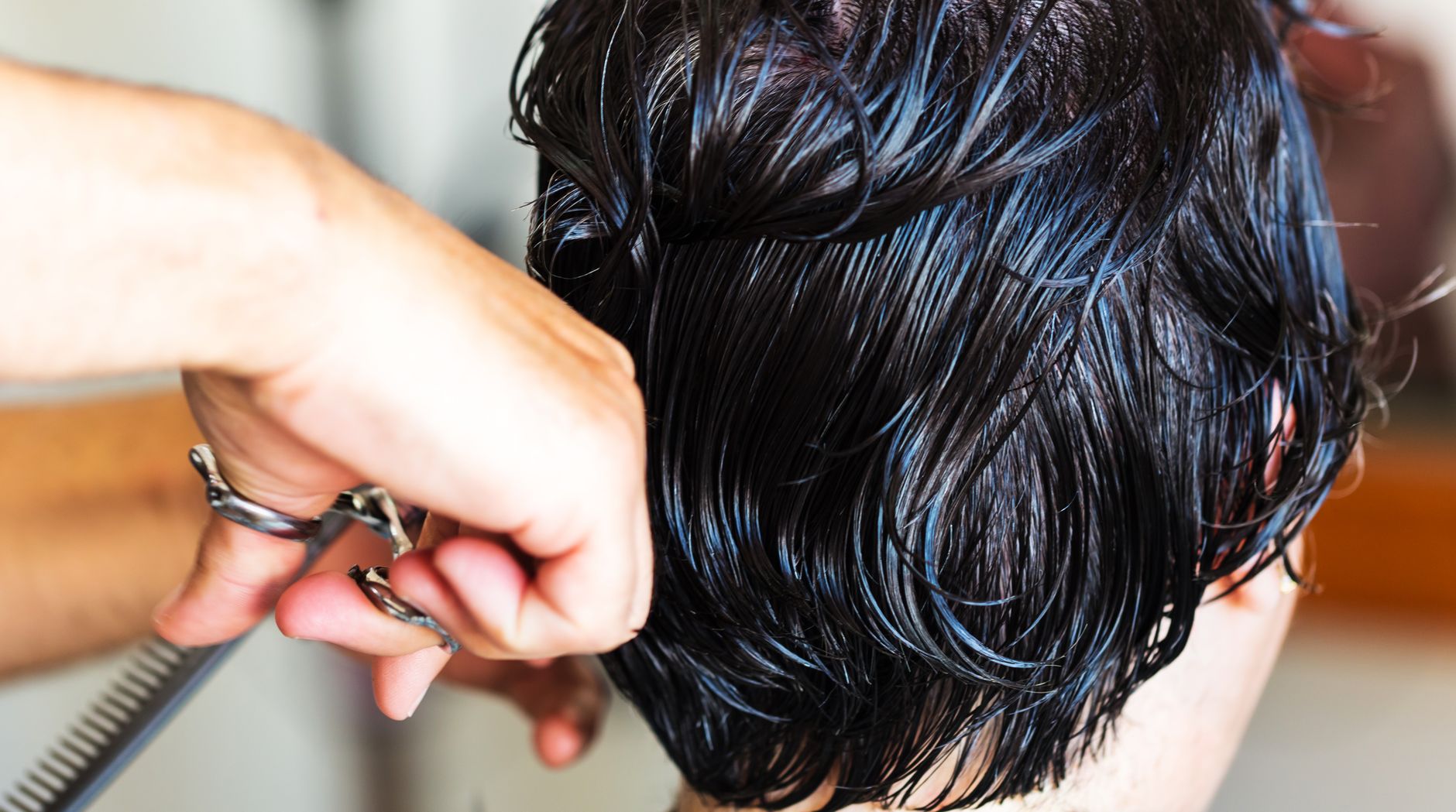
What Cosmetology Programs Teach
A cosmetology program prepares you for your state’s cosmetology license, and the license sets what you learn. Every program combines theory with hands-on practice:
- Hair: cutting with shears, razor and clippers; color, highlights and lightening; permanent waves, relaxers and other chemical texturing; blow-drying, setting and styling.
- Science and safety: infection control, anatomy of hair and scalp, and the chemistry of the products you will use on clients.
- Nails and skin basics: manicures, pedicures and basic facial services, in the share each state’s curriculum requires.
- State law and business: your state’s rules, salon management and client service.
You practice on mannequin heads first, then on paying clients in a student salon under an instructor. The program ends when you’ve logged the hours your state requires and passed the school’s own exams, which makes you eligible for the state board exams.
This site has verified 1,491 cosmetology programs at 1,276 schools in 51 jurisdictions, on each school’s own program and disclosure pages.
How Many Hours Cosmetology Training Takes by State
Your state decides the hours. Across 51 jurisdictions with a published requirement, the range runs from 1,000 to 1,800 hours and the median is 1,500. Twenty-four jurisdictions require exactly 1,500.
| Hours required | States |
|---|---|
| 1,000 | California, Massachusetts, New York, Puerto Rico, Rhode Island, Texas, Vermont, Virginia |
| 1,110 to 1,250 | Oregon (hair design, 1,110), Florida, New Hampshire and New Jersey (1,200), Oklahoma, Pennsylvania and Utah (1,250) |
| 1,500 | Alabama, Arizona, Illinois, North Carolina, Ohio, Tennessee and 18 other states |
| 1,550 | Iowa, Minnesota, Wisconsin |
| 1,600 to 1,650 | Idaho, Nevada, New Mexico, Washington, Wyoming (1,600); Alaska (1,650) |
| 1,800 | Hawaii, Nebraska, West Virginia |
Hours aren’t the whole rule. Illinois requires the 1,500 hours over at least 8 months, Louisiana over at least nine consecutive months, and Pennsylvania’s 1,250 hours over at least 8 months of days or 15 months of nights. Texas lets you take the written exam after 900 hours. Look up your state on the license hours checker before comparing programs.
Many states also offer a longer apprenticeship route in a working salon, such as 3,000 apprentice hours in Alabama, Illinois and Mississippi against 1,500 in school.
How Long a Cosmetology Program Takes
Hours turn into calendar time through your schedule. Programs that publish a length have a median of 44 weeks. Some examples on the same 1,500 hours:
- Avalon Institute-Mesa in Arizona: 52 weeks of days at 35 hours a week, or 81 weeks of evenings at 22.5 hours.
- Salon Professional Academy-Huntsville in Alabama: 44 weeks on a five-day schedule, with three-day options.
- Blue Cliff Career College in Mobile: 12 to 14 months of days or 18 to 19 months of nights.
In 1,000-hour states the timeline is shorter. Federico Beauty Institute in Sacramento runs 30 hours a week full time or 20 part time, and Bellus Academy-El Cajon runs its 1,000-hour Cosmetology Foundation in 29 weeks of days or 40 weeks of nights. For a deeper breakdown, see how long cosmetology school takes.
Evening, Weekend and Part-Time Cosmetology Classes
If you work days, look for evening classes. Of the 1,491 programs on this site, 285 run evening classes, 25 run weekend classes and 445 offer part-time study; in all, 569 offer at least one of those options.
| School | Location | Day schedule | Evening or part-time schedule |
|---|---|---|---|
| Winonah’s International School of Cosmetology | Hoover, AL | 40 weeks at 37.5 hours | 63 weeks of evenings at 24 hours |
| Empire Beauty School-Avondale | Avondale, AZ | 43 weeks full time | 86 weeks part time |
| Academy of Beauty Professionals, Madison | Madison, WI | 45 weeks at 35 hours | 76 weeks at 20 hours |
| Austin Kade Academy | Idaho Falls, ID | About 47 weeks at 34 hours | About 64 weeks of nights at 25 hours |
| Central Technology Center | Drumright, OK | Adults 8:25 AM to 3:35 PM | 4:00 to 10:00 PM at Sapulpa |
Part-time programs sometimes cost more. The Academy of Beauty Professionals lists $30,655.17 in full-time tuition and $31,645.17 part time. The part-time cosmetology programs ranking lists the strongest options.
Where Cosmetology Training Happens
Most programs are at private schools. By control, 865 schools on this site are private for-profit, 386 are public and 17 are private nonprofit.
- Private beauty schools and chains tend to start classes often and run several schedules. Most name NACCAS as their accreditor; 656 programs on this site do.
- Public technical centers in Florida, Oklahoma, Tennessee and Ohio run clock-hour programs at lower tuition, often for in-district residents first.
- Community colleges fold cosmetology into certificates, diplomas or associate degrees counted in credits. The community college cosmetology programs ranking compares them.
Federal records show the scale: IPEDS counts 49,509 cosmetology awards conferred in 2022-23 at the schools on this site. Those are certificates and degrees awarded, not graduates.
Cosmetology Programs by State
Programs verified on each school's own pages, November 2026, at 1,276 campuses.
What Cosmetology Programs Cost
Of the 1,491 programs, 779 publish a tuition line. The median is $18,000, the lowest is $3,072 and the highest is $30,655.17. Those are tuition figures; kits and books are often listed separately.
| School | Hours | Published tuition | Listed separately |
|---|---|---|---|
| Robert Morgan Educational Center, Miami, FL | 1,200 | $3,072 (2026-27, in-state) | |
| South Dade Technical College, Homestead, FL | 1,200 | $3,072 (2026-27, in-state) | $1,300 books and supplies |
| Florida Gateway College, Lake City, FL | 1,200 | $3,395.60 | $2,387 kits and materials |
| Paul Mitchell the School-Arkansas, Fayetteville | 1,500 | $16,000 | $1,830 technical kit |
| Gulf Coast College, Metairie, LA | 1,500 | $24,518 | $1,891 books and supplies |
| IntelliTec College, Grand Junction, CO | 1,695 | $28,476 | $1,066 tools, $706 books |
A blank cell means the school’s line names no separate kit charge. For a full breakdown, read the cosmetology school cost guide or line up programs on the school cost comparer.
Pass Rates and Completion Rates
Of the programs on this site, 414 publish outcomes, and the median published licensure pass rate is 95%. A strong rate is worth paying attention to, and so is a weak one:
- Salon Professional Academy-Huntsville reports a 100% state board pass rate for 2024.
- Paul Mitchell the School-Arkansas reports 99% licensure campus-wide for 2024.
- Milan Institute of Cosmetology-Vacaville reports 100% license exam passage but 16.7% on-time completion for 2024.
Completion tells you whether students finish on schedule; licensure tells you whether those who finish pass. The best outcomes ranking sorts schools by both.
The State Board Exams Your Program Prepares You for
Finishing the hours makes you eligible to test. The exams differ more than most people expect:
- Written and practical: Alabama requires written and practical exams through PSI, both passed within 24 months of your first application. North Carolina sets the passing score at 75% (70% for apprentices).
- Written only: California gives a written exam through PSI and issues the license the same day you pass. Massachusetts dropped its practical and gives a written theory exam through PSI. Pennsylvania gives a state theory exam through Pearson VUE and dropped its practical on November 25, 2014.
- The national exam: Delaware, Maine, Montana, South Carolina, South Dakota and Wyoming use the NIC written and practical exams; Montana and Wyoming schedule them through Prov.
In a written-only state, theory study carries more weight; in a practical state, you will perform services in front of an examiner. Each state’s exam details are on its license page, starting from the cosmetology license hub.
Certificate or Associate Degree
Most cosmetology programs end in a certificate or diploma, which is all the license requires. Some public colleges also offer the training inside an associate degree. Eastern Arizona College runs 1,500 hours as a certificate over three full-time semesters or as an AAS over four, with required Saturdays each month. Northland Pioneer College offers an AAS alongside shorter certificates, and Arkansas Tech University offers an Associate of Applied Science in cosmetic science. The cosmetology degree guide covers when the extra semester pays off.
Hybrid, Refresher and Crossover Courses
Not every program is a full first-time license course.
- Hybrid programs: 92 programs move part of the theory online while the hands-on hours stay at school. See the hybrid cosmetology programs ranking and the online cosmetology school guide.
- Refresher requirements: Minnesota requires a skills course certificate if your training is more than five years old.
- Barber crossover: Ohio requires 1,000 hours for licensed barbers instead of 1,500, and West Virginia lets licensed barbers cross over with 900 hours.
How to Choose Among Cosmetology Programs
- Start with your state’s hours. A 1,000-hour program won’t qualify you in a 1,500-hour state.
- Pick a schedule you can keep. Compare the day and evening lengths a school publishes, not just the hours.
- Price tuition and the kit together. The separate kit and book lines in the cost table run from $1,300 at South Dade to $2,387 at Florida Gateway.
- Read the published outcomes, with their year and whether they cover cosmetology or the whole campus.
- Check federal aid and accreditation if you plan to borrow. The financial aid ranking lists programs that state they take aid.
To find programs near you, use the school finder or open your state ranking, such as cosmetology schools in Texas or California.
Frequently Asked Questions
How Many Hours Is a Cosmetology Program?
It depends on your state. License requirements run from 1,000 to 1,800 hours, and 1,500 hours is the most common, required in 24 states. The programs on this site have a median of 1,500 clock hours.
Are There Evening or Night Classes for Cosmetology?
Yes. Of 1,491 programs on this site, 285 run evening classes, 25 run weekend classes and 445 offer part-time study. Winonah's International School of Cosmetology in Hoover, Alabama, for example, runs 1,500 hours in 40 weeks of days or 63 weeks of evenings.
Can You Take Cosmetology Classes Online?
Only part of the theory. Of the 1,491 programs on this site, 92 move some theory online in a hybrid format; the practical hours on mannequins and clients happen at the school.
Is There a Cosmetology Refresher Course?
Some states build one into the license rules. Minnesota requires a skills course certificate if your training is more than five years old (Minn. R. 2105.0145).
What Is the Difference Between Cosmetology Classes at a College and a Beauty School?
Beauty schools usually count clock hours and start classes often; community and technical colleges may count credits and start by term. Of the programs on this site, 1,086 state clock hours and 193 state college credits.
How Much Do Cosmetology Programs Cost?
Published tuition ranges from $3,072 at public technical colleges in Florida to $30,655.17 at the Academy of Beauty Professionals in Wisconsin, with a median of $18,000. Kits and books are often listed separately.
Keep Reading
- What Is CosmetologyWhat cosmetology covers, what a licensed cosmetologist may do, and how the training and license work
- How Long Cosmetology School TakesHow many clock hours and weeks cosmetology school takes, by state requirement and by the schedules schools publish
- Online Cosmetology SchoolWhat part of cosmetology training can be online, which schools run hybrid theory and why the practical hours stay in person
- Cosmetology DegreeWhich community and technical colleges award an associate degree in cosmetology, how it differs from a clock-hour certificate, and what it costs
- How to Become a CosmetologistThe school hours, state board exams and license steps that take you from no experience to a licensed cosmetologist
- Cosmetology School CostWhat cosmetology school costs, from the program tuition figures schools publish, what the tuition figure leaves out and how to pay for it
- Continuing EducationWhich states require continuing education to renew a cosmetology license, how many hours, and how often you renew
- Best Cosmetology SchoolsEvery verified program, ranked
- Cosmetology License by StateHours, exams and fees in every state